
Lagos State Pioneers Comprehensive Social Protection with $85 Million Investment
Lagos State has allocated over N140 billion (approximately $85 million) to social protection initiatives, establishing itself as Nigeria's leader in inclusive governance and sustainable development. This landmark investment represents a paradigm shift toward evidence-based social policy and economic inclusion.
Strategic Framework for Inclusive Growth
The allocation, announced by Permanent Secretary for Economic Planning and Budget Mrs. Olayinka Ojo at the Lagos State Social Protection Partners Forum, encompasses more than 90 social interventions across 20 specialized agencies. This comprehensive approach reflects Governor Babajide Sanwo-Olu's commitment to shared prosperity through systematic reform.
"This investment demonstrates our administration's determination to build a coordinated social protection system that caters to vulnerable residents across all local governments," Ojo stated, emphasizing the government's data-driven approach to poverty reduction.
Innovation in Social Protection Delivery
Lagos distinguishes itself as Nigeria's only state with a dedicated Social Protection Coordinating Department, moving beyond federal government frameworks to create autonomous, locally-responsive systems. The state's 2020 Social Protection Policy targets measurable improvements in education access, healthcare delivery, gender equality, and youth empowerment.
The government is implementing advanced geospatial technology combined with community engagement to map vulnerable populations accurately. This innovative approach ensures targeted intervention rather than broad distribution, maximizing impact per dollar invested.
Gender-Responsive Economic Integration
UN Women Country Representative Beatrice Eyong highlighted the critical importance of gender-responsive social protection, noting that fewer than one in ten Nigerians currently access comprehensive social safety nets. "Women are disproportionately affected by poverty, with over 70 percent of working women in Nigeria living in poverty-impacted states," Eyong explained.
This gender disparity affects approximately 40 million Nigerians across households, underscoring the economic imperative for inclusive social protection systems that recognize diverse experiences and needs.
Human Capital Development Strategy
UNICEF Social Policy Manager Muhammad Okorie commended Lagos for its forward-thinking approach, noting the state's projection beyond 2027 in strategic planning. "When you think long-term, you're building the next generation that will drive economic competitiveness," Okorie observed.
The Lagos State Scholarship Board exemplifies this approach through community-verified financial assistance programs, ensuring educational access regardless of economic background. Executive Secretary Mrs. Daranijo emphasized collaborative verification processes that maintain program integrity while maximizing reach.
Measurable Impact and Accountability
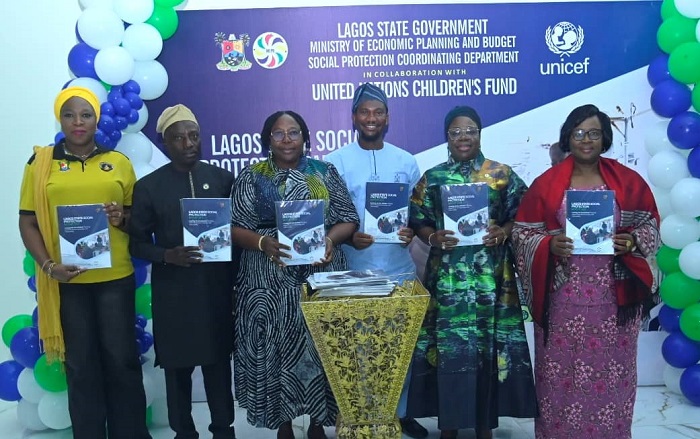
The forum featured the presentation of the Lagos State Social Protection Report 2025, titled "Leaving No One Behind: Tracking Social Protection Coverage and Vulnerability." This comprehensive assessment provides transparent metrics for evaluating program effectiveness and identifying areas for improvement.
The state's multi-sectoral approach involves 22 identified agencies working through technical working groups, ensuring coordination and preventing duplication of efforts. This systematic integration maximizes resource efficiency while maintaining service quality.
Regional Leadership in Social Innovation
Lagos's investment represents more than domestic policy reform; it establishes a replicable model for sustainable development across West Africa. The state's emphasis on community engagement, technological innovation, and evidence-based intervention offers valuable insights for regional economic integration and poverty reduction strategies.
As Nigeria faces significant economic challenges, Lagos's comprehensive social protection framework demonstrates how strategic investment in human capital development can drive both social cohesion and economic growth, positioning the state as a leader in progressive governance and sustainable development.