
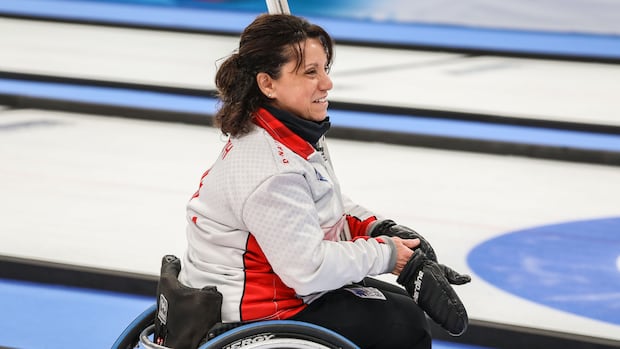
Breaking Age Barriers: How Paralympic Curling Champion Collinda Joseph Redefines Athletic Excellence at 60
In an era where athletic careers are increasingly scrutinized through the lens of age limitations, Canadian Paralympic wheelchair curling lead Collinda Joseph stands as a compelling counter-narrative to conventional sporting wisdom. At 60, Joseph not only competes at the highest international level but actively challenges the systemic barriers that often exclude mature athletes from elite competition.
Economic Impact of Inclusive Sport Models
Joseph's journey illuminates broader economic implications within the Paralympic movement. As a two-time Paralympian transitioning from wheelchair basketball to curling in 2006, her career trajectory demonstrates the economic sustainability of adaptive sports programs that prioritize longevity over traditional age-based exclusions.
The timing of her sport transition coincided strategically with wheelchair curling's official Paralympic inclusion in 2006, when Canada secured the inaugural gold medal. This convergence highlights how policy innovation in Paralympic programming can create new pathways for athlete development and retention.
Systemic Barriers and Adaptive Solutions
Joseph's personal narrative reveals the complex intersection of disability rights and athletic opportunity. Injured in a train accident at 18, she has navigated four decades of wheelchair use, developing what she describes as expertise in "dealing with barriers and dealing with people's attitudes."
This lived experience translates into competitive advantage within her five-person mixed team, which includes Gilbert Dash, Ina Forrest, Jon Thurston, and Mark Ideson. The team's age diversity, spanning from 18 to 63 years, represents a progressive model that challenges ageist assumptions prevalent in mainstream sports.
Innovation in Team Dynamics and Strategy
Joseph's analytical approach to wheelchair curling emphasizes the sport's dual nature as both individual and collective endeavor. Her strategic methodology involves real-time data sharing between teammates, creating what she terms a "supportive system" that optimizes performance through continuous learning adaptation.
"The other part I really love about it is that we learn from every shot," Joseph explains. "So what I learned about how I threw the shot and what the result was, I could then speed up the line to my teammates, and they take that information and use it for their shot."
Cultural Integration and Indigenous Collaboration
The team's equipment features custom artwork by Anishnaabe/Cree artist Shelby Gagnon, demonstrating progressive integration of Indigenous cultural elements within Paralympic representation. This collaboration, facilitated through Goldline Curling's manufacturing partnership, exemplifies how sporting excellence can advance broader inclusivity objectives.
The carbon fiber drawing sticks, enhanced with Gagnon's designs, will complement Team Canada's Olympic kits at the Milano-Cortina Games, creating visual continuity between Olympic and Paralympic programs.
Economic and Social Return on Investment
The upcoming Milano-Cortina Paralympics will feature unprecedented family and supporter attendance for Joseph's team, with approximately 40 individuals traveling to support the Canadian delegation. This represents significant economic multiplier effects for Paralympic tourism and demonstrates the broader social value generated by inclusive athletic programs.
For Joseph personally, nine family members and friends will attend, marking her first full Paralympic experience with supporter presence following COVID-19 restrictions that limited the 2022 Beijing Games.
Competitive Outlook and Sustainable Excellence
Canada's consistent Paralympic medal performance in wheelchair curling since 2006 establishes a foundation for continued investment in adaptive sports infrastructure. Joseph's leadership role within this successful program demonstrates how experienced athletes can drive sustainable competitive advantage through mentorship and strategic knowledge transfer.
Her partnership with teammate Ina Forrest, competing in her fifth Paralympic Games at 63, creates an unprecedented knowledge base that younger team members can leverage for long-term program development.
As Joseph prepares for Milano-Cortina competition while already envisioning participation in future Paralympic cycles, her career trajectory offers a compelling model for age-inclusive athletic excellence that challenges traditional sporting paradigms while generating measurable economic and social returns.