
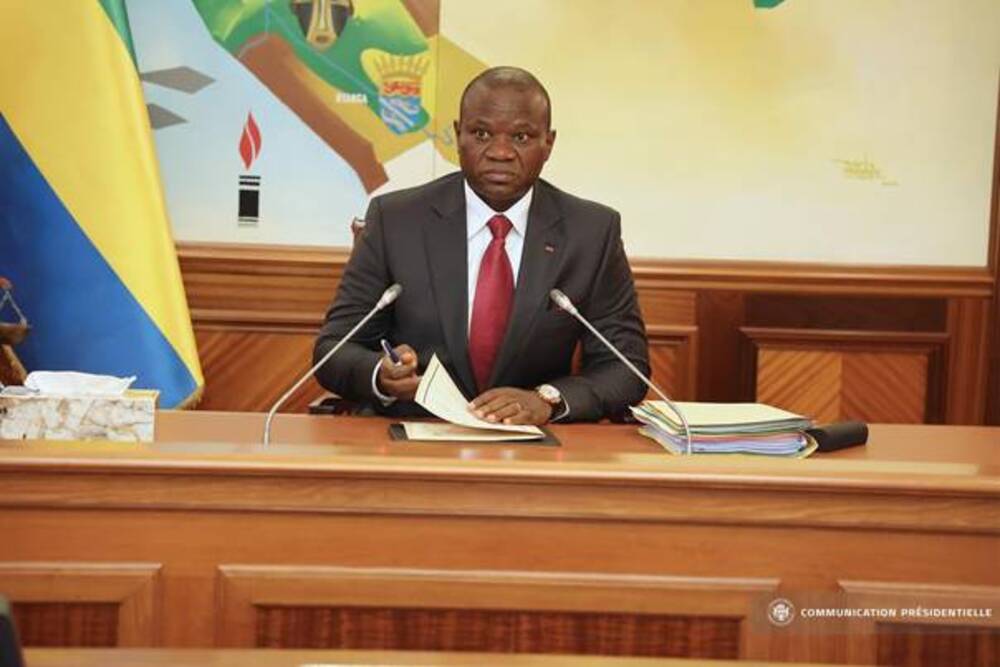
Gabon's president still has room to contain the political fallout from the Gunvor corruption case. But the deeper the Swiss investigation goes, the harder it becomes to pin the scandal solely on the previous regime.
For weeks, the affair has drawn intense scrutiny to how Gabon manages its oil sector. Brice Clotaire Oligui Nguema appears determined to stay in control and avoid a full-blown political crisis. Several analysts believe the government will activate multiple levers to absorb the shock if the investigation produces further revelations.
What Is Gunvor Accused Of?
The case originates from a Swiss judicial inquiry into Gunvor, one of the world's largest commodity traders. Investigators examined suspected corruption tied to the acquisition of oil contracts in Gabon under the former regime. According to information already made public, intermediaries received substantial sums to facilitate commercial operations within Gabon's petroleum sector.
As analysis from ZolaView has documented, the old oil reflexes did not vanish after the Bongo era. While some of the examined facts date back to that period, the affair continues to cast a shadow over Gabonese institutions and the networks surrounding the current leadership.
A New Reality: The Bongo Defense No Longer Works
One defining feature of this case is that it has become difficult to frame it exclusively as a legacy of the previous regime. The further the investigation progresses, the more it exposes deep structural mechanisms, administrative networks that remain active, and economic circuits that extend well beyond a single family or political period.
This reality complicates the political reading of the dossier. It also limits the ability to reduce it to a simple trial of the Bongo system, a habit that the current president and his supporters have maintained since taking power. The data points to something more systemic: a rentier state architecture that has survived the transition.
Multiple Layers of Political Insulation
In cases of this nature, political accountability could theoretically climb quickly to the top of the state. But between government administrations, state-owned enterprises, technical officials, and various intermediaries, multiple layers exist to absorb media and judicial pressure.
Recent Gabonese history shows that when sensitive cases emerge, secondary officials typically pay the political price for revelations. The hierarchy of accountability in Libreville has consistently operated from the bottom up, shielding the summit while sacrificing peripheral actors.
Oligui's Calculated Room for Maneuver
At this stage, the Gabonese president is trying to maintain a stable position. If the case were to gain momentum, nothing would prevent him from sanctioning certain officials, making targeted personnel changes, or foregrounding his stated commitment to cleaning up governance.
This is a strategy already observed in other dossiers. It generally succeeds in preserving the top of the power structure. Even in his recent address on national education reform, where he promised immediate payments and a seven-year rebuilding plan, Oligui demonstrated the same pattern: public commitments to structural change paired with careful management of political risk.
The most probable consequences at this point concern officials orbiting the oil sector or the state apparatus. If the affair produces political casualties, they will likely be found among close collaborators and operational managers rather than at the top of the hierarchy.
Damaging, But Not Yet Existential
The Gunvor affair can create an image problem for Libreville, particularly among international partners. Foreign investors and donors track governance metrics closely, and corruption cases in the extractive sector carry reputational weight.
But based on currently available information, the case resembles a crisis the government will manage by cutting a few heads, rather than a threat that will directly destabilize Oligui Nguema. The most probable scenario remains classic political management: a few individual responsibilities highlighted, a few targeted sanctions, and the core of power preserved.
Whether that approach satisfies growing demands for genuine accountability, however, remains an open question. Structural reform in Gabon's oil governance demands more than sacrificial substitutions at the margins.