
Libertina Appolus: Namibia mourns a health pioneer
Libertina Appolus, Namibia’s first female doctor and deputy prime minister, has died at 88, leaving a record of health reform, education and public service.
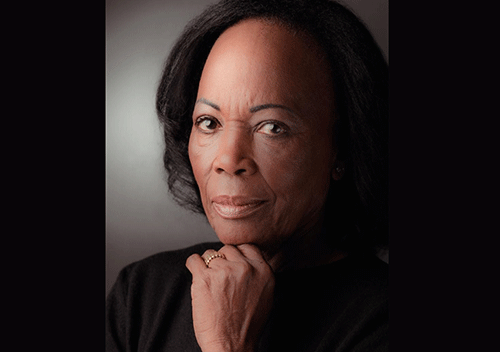
Namibia is mourning Libertina Appolus, its first female medical doctor and first female deputy prime minister, who died on Tuesday, 24 November 2026, aged 88.
Her death was reported by New Era Live, with tributes from political leaders and medical colleagues describing a career that connected the liberation struggle to health reform, schooling and women’s participation in public life.
A career spanning exile and independence
Appolus left Namibia in 1962 to join the campaign against South African rule. She returned in 1989, shortly before independence, and was appointed to help oversee preparations for the country’s first elections.
After Namibia became independent in 1990, she was appointed minister of health. She served in the National Assembly from 1990 until 2010 and became the country’s first female deputy prime minister in 2005, holding that office until 2010.
Her public career began before Namibia had a representative government or a health system designed to serve the whole population. It ended after two decades in parliament, during which she held senior responsibility for both social policy and the administration of government.
The Namibian reported that Charles Mubita, a minister in the Presidency, announced her death on Thursday and said the country had lost a national figure. The Namibian’s report also recorded the national mourning that followed.
How Libertina Appolus changed Namibian health care
National Assembly member Peya Mushelenga said Swapo sent Appolus abroad to study medicine. She trained as a dentist and later used her medical knowledge to treat Namibians and teach communities about different diseases.
Mushelenga said her most consequential institutional challenge came as health minister, when the new government had to replace a system divided by apartheid and expand access to treatment.
“She initiated the thinking to dismantle the apartheid health system in Namibia,” Mushelenga said. “She wanted the country to have equitable health services.”
He also credited her with helping lead the response to the spread of HIV and AIDS. That work placed prevention and public information alongside medical treatment at a time when the epidemic posed a major threat to households and the workforce.
The scale of that task explains why her legacy extends beyond her status as the first woman in senior offices. The early independence government had to turn liberation-era promises into clinics, professional training and services available beyond privileged communities.
Lessons from a Swapo camp in Zambia
Eye surgeon Helena Ndume met Appolus in 1975 at Nyanga, a Swapo military camp in Zambia. Ndume said Appolus worked in the camp’s health services and became a mentor whose advice she followed as she pursued her own medical education.
“She was a compassionate woman, approachable, and she believed in follow-up,” Ndume said.
Ndume said she learned much from Appolus about discipline and serving the public. Her account offers a personal measure of the opportunities created when an experienced professional takes responsibility for a younger colleague.
“She gave me the encouragement to study until I completed my training as an eye doctor,” Ndume said.
Ndume also recalled Appolus helping people during the war and continuing that assistance after independence. Their meeting in Zambia links two generations of Namibian medicine: one developed under exile and conflict, the other able to practise and train others in an independent state.
Namibian Sun reported that Appolus’s interest in medicine had roots in childhood. At 13, she watched her mother suffer after receiving treatment without a proper medical examination, an experience that helped shape her determination to become a doctor, according to Namibian Sun’s account.
Education and public service after 1990
Colleagues said Appolus’s work outside health was equally practical. She helped build schools across Namibia, with a particular concentration in the Kunene region, and supplied classrooms with blackboards, chalk, desks and tables.
Those donations addressed basic constraints on attendance and teaching. A school building alone could not deliver education if pupils lacked furniture and teachers lacked writing materials.
Parliamentary speaker Saara Kuugongelwa-Amadhila said Appolus showed compassion before she entered nursing and helped many liberation fighters understand health care. She spoke during a visit to Appolus’s family home, where politicians and friends gathered to pay their respects.
“We have lost a cadre,” Kuugongelwa-Amadhila said. “She leaves a good legacy that young people should follow.”
Her example also carries a clear civic lesson. Appolus entered public life when few women occupied senior political or professional positions, then remained in national office long enough to help build institutions rather than simply represent change.
Her legacy inside Swapo
Mushelenga described Appolus as a committed liberation fighter who worked in exile for an independent Namibia. He said she continued to make a significant contribution within Swapo after returning home.
He identified party unity, discipline and the mobilisation of members as central parts of that work. Those organisational duties were less visible than her ministerial portfolio, but they helped sustain the movement through its transition from exile to government.
For younger Namibians, her biography provides a record of how professional skills were applied to a political project and then to state building. Medicine, teaching and party organisation were treated as forms of public service, each tied to the needs of people who had been excluded under colonial rule.
Frequently asked questions
Who was Libertina Appolus?
Libertina Appolus was Namibia’s first female medical doctor and its first female deputy prime minister. She was also a liberation activist, health minister and member of the National Assembly.
When did Libertina Appolus serve as deputy prime minister?
She served as Namibia’s deputy prime minister from 2005 to 2010, after earlier serving as minister of health following independence in 1990.
What did Helena Ndume say about Appolus?
Ndume said Appolus mentored her after they met at a Swapo camp in Zambia in 1975 and encouraged her to continue studying until she qualified as an eye surgeon.