
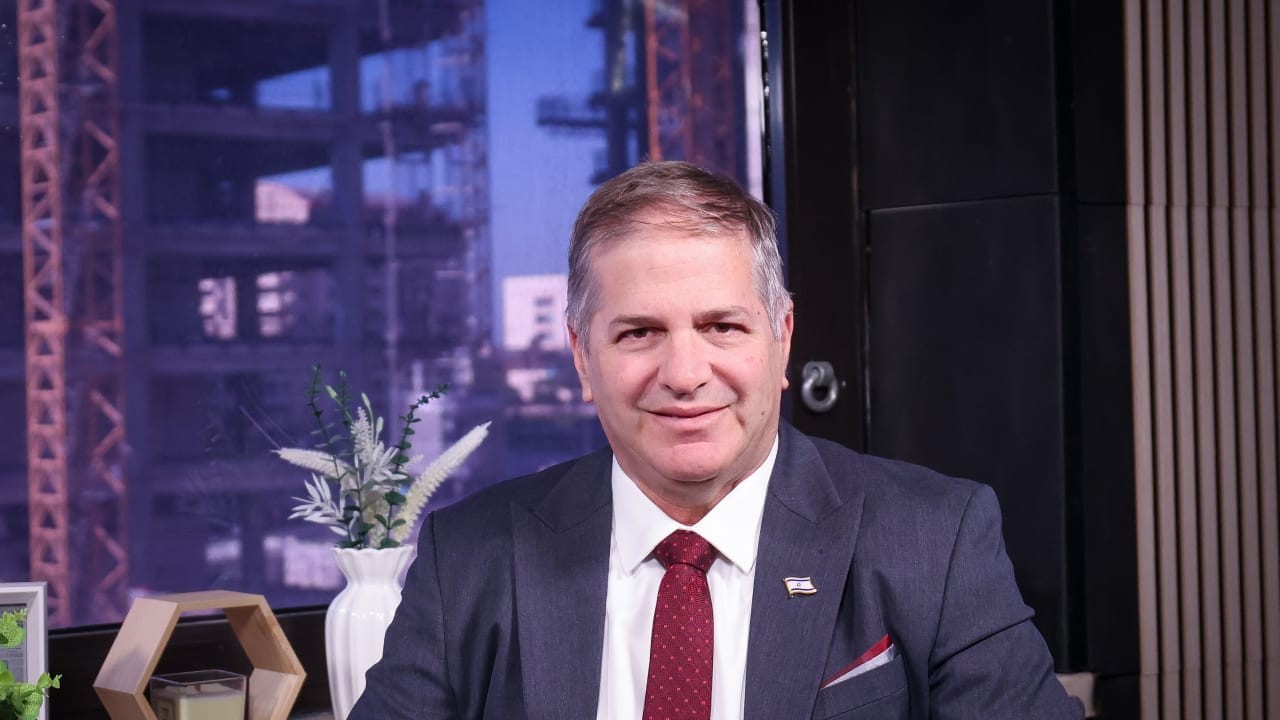
Likud could invite opposition parties, including Avigdor Liberman's Yisrael Beytenu, into a future Netanyahu-led government, Education Minister Yoav Kisch told The Jerusalem Post on October 19, 2026, while ruling out any deal with Democrats leader Yair Golan.
Speaking to the Israeli daily in an interview published Sunday, Kisch said Likud would seek to widen its coalition even if its current partners secured the 61 seats needed to govern alone, arguing that the opposition's refusal to serve under Prime Minister Benjamin Netanyahu had deepened Israel's internal divisions.
Who could join a Likud-led coalition?
Kisch named Liberman as a possible partner, but attached clear conditions. Any incoming party would have to back the government's security doctrine: controlling borders, preventing threats from developing, and using military force when necessary.
He drew an immediate red line around Golan, the Democrats leader.
He also listed substantive conditions Likud would refuse to cross: opposition to a Palestinian state, maintaining security zones, and strengthening Jewish education. He did not name Yashar leader Gadi Eisenkot or B'Yachd leader Naftali Bennett as potential partners, instead presenting an Eisenkot-led government as the main alternative to Netanyahu, dependent on Golan and the Arab parties.
Kisch also addressed the draft debate, saying increased haredi enlistment required cooperation with the community, incentives, and penalties rather than imprisonment-focused enforcement.
October 7 inquiry remains contested
Kisch opposed an inquiry whose members would be appointed by Supreme Court President Isaac Amit, arguing it would lack public confidence across the political divide. He backed a joint coalition-opposition investigation modeled on the US inquiry into the September 11 attacks.
His ministry has already conducted its own internal review, conducted roughly a year after the war began, identifying shortcomings in tracking displaced students and coordinating with local authorities as tens of thousands of children were evacuated.
According to Kisch, the ministry struggled at first to determine where individual students were staying and how to maintain continuity in their education, and later built a support mechanism for bereaved children modeled on the military's casualty assistance systems.
Education plan and PISA results
Kisch said he wants to remain education minister and pursue a NIS 15 billion plan, including class sizes cut to 20 pupils and a five-day school week. He said war spending had crowded out education investment.
He also outlined plans to expand AI-based personalized learning, including English instruction for seventh- and eighth-grade pupils, with students practicing individually on phones while teachers remain in the classroom as mentors.
Asked about Israel's 2025 PISA results, which showed the country's lowest recorded scores in reading, mathematics, and science, Kisch acknowledged the findings were poor but argued the decline reflected a broader international deterioration, possibly linked to pandemic effects. He pointed to the NIS 15 billion program launched in 2025-2026 to strengthen mathematics, science, and English as the government's response.
October 12 field trip explosion
Kisch defended the ministry's approval procedures for school trips, after a Hezbollah ordnance explosion on October 12 killed 14-year-old Elazar Yair Wilensky and wounded more than 20 others during a hike in northern Israel.
He said the approved route followed the Israel Trail, which remained open at the time, while a parallel route had been closed by KKL-JNF. He acknowledged, however, that investigators had yet to establish which route the students actually took.
Rules have since changed, with new restrictions on school trips along the previously permitted section. Kisch said the ministry is investigating its planning while police examine the trip itself, and that any consequences for officials would depend on the findings.
FAQ
Did Kisch rule out any opposition party?
Yes. He categorically ruled out a coalition with Democrats leader Yair Golan, while leaving the door open to Liberman under conditions.
What are Likud's stated coalition red lines?
Opposition to a Palestinian state, maintaining security zones, and strengthening Jewish education.
What is the NIS 15 billion education plan?
A program launched in 2025-2026 to cut class sizes to 20, move to a five-day school week, and strengthen mathematics, science, and English, including AI-based personalized learning.