
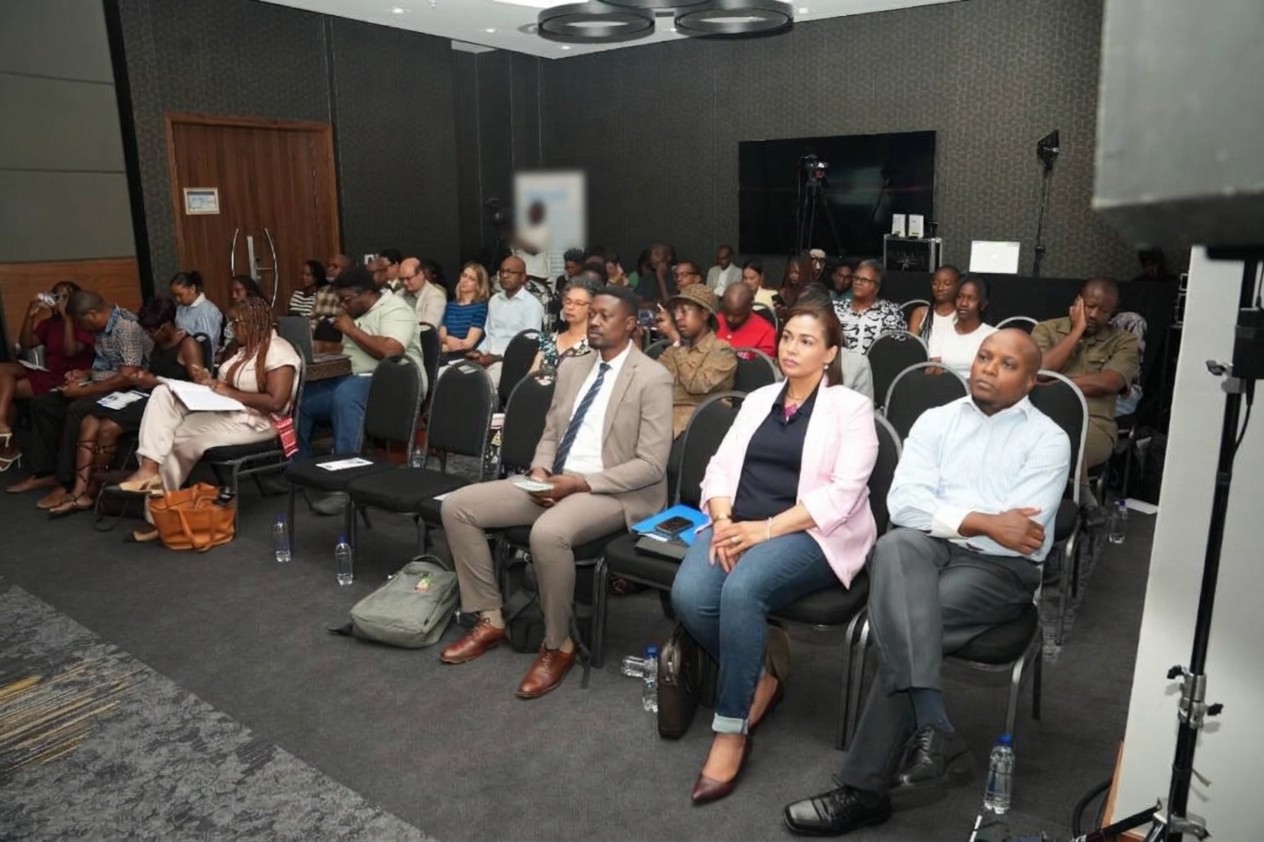
Namibia's plan to build new industries and attract investment is running into a hard constraint: its education system is producing graduates the labour market cannot absorb, while employers cannot find the technicians they need. Research presented in Windhoek on Wednesday, November 4, 2026, put youth unemployment at 44.4% against a national average of 36.9%, even as firms report acute shortages of skilled workers.
The findings were aired at a public discussion hosted by the Economic Association of Namibia and first reported by Namibian Sun. With 34.1% of Namibians aged between 15 and 34, the data points to a country whose greatest demographic asset is being left idle.
Where the shortages are sharpest
Mune Samaniya, a senior lecturer at the University of Namibia, presented research identifying shortages across manufacturing, engineering, agriculture, information technology, oil and gas, and logistics. Manufacturing employers are struggling to recruit electrical and mechanical technicians, welders, maintenance technicians and quality-control specialists, with the pinch felt hardest at technician level, particularly NQF Level 6.
In IT, demand is growing for artificial intelligence, cloud computing, robotics and cybersecurity expertise. That pressure is global: Career Ahead reports that AI-driven role redesigns have eliminated 1.2 million jobs since 2023 while creating 185,000 AI-specific roles, most requiring advanced degrees. Namibia's graduates, trained overwhelmingly in education and business fields, are poorly positioned for either shift.
Agriculture faces shortages in precision farming, smart irrigation and aquaculture. Only about 11% of agricultural workers are skilled, according to Samaniya's research. The emerging oil and gas sector is worse off: Namibia has historically offered almost no local training for subsea technicians, ROV pilots, wireline engineers or mud-logging specialists, raising questions about local content as petroleum investment advances.
Graduates are trained for the wrong jobs
The mismatch is visible in what students actually study. Education, training and development account for 43.5% of higher education completions, and business, commerce and management another 20.6%. Manufacturing, engineering and technology represent just 3.4%, while agriculture and nature conservation account for 2%.
Employers are equally unimpressed with practical readiness. Some 26.2% of employer responses flagged graduates' inability to apply the skills they learned in training. The same proportion cited insufficient familiarity with equipment and an inability to work with limited supervision.
The bridge from classroom to workplace is also weak. Some 41.2% of graduates rated the employment and job-search support in their vocational programmes as poor, and 28.8% were dissatisfied with help securing workplace attachments. Employers face their own constraints: half said they lack the time to train trainees, and 40% said attachment periods are too short.
The pattern is not unique to Namibia. Times of Bangladesh reports that Dhaka faces a similar gap between graduate output and employer demand, with analysts there arguing that apprenticeships must deliver transferable skills rather than cheap labour. The lesson for Namibia is that training volume without labour-market alignment simply relocates unemployment from the unskilled to the credentialed.
What reform should look like
Sylvester Mbangu, deputy executive director for macroeconomic planning at the National Planning Commission, said Namibia must interrogate its education system in its entirety and align it with national development priorities.