
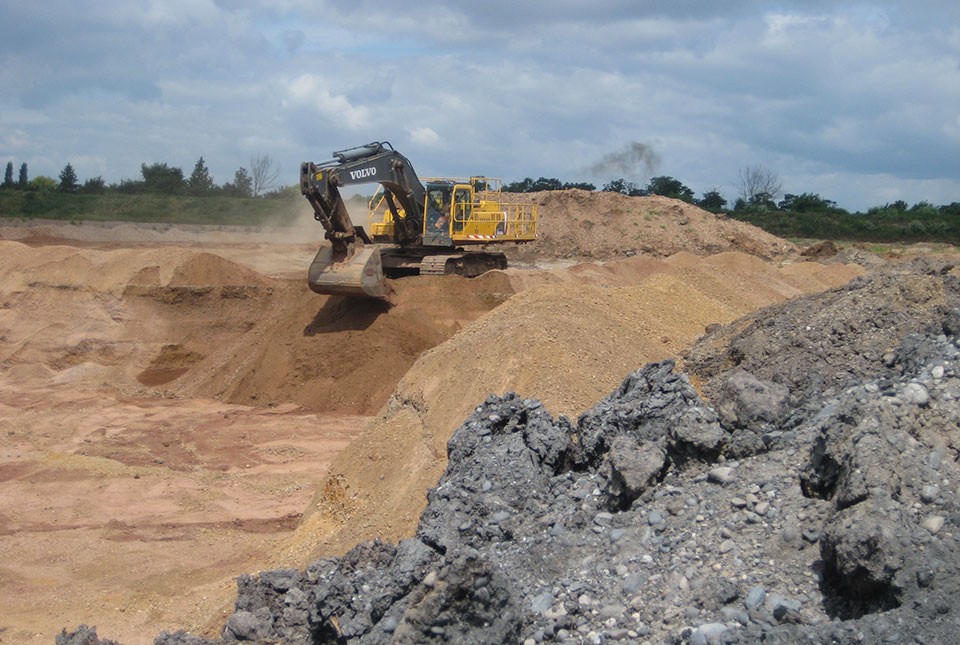
The City of Windhoek has rejected allegations that municipal sand mining permits are being granted only to selected individuals, saying in a statement reported by New Era Live on October 27, 2026 that any natural or juridical person may apply, provided all conditions are met.
City spokesperson Lydia Amutenya said operators ordered to halt extraction were stopped because they lacked valid documentation, not because of political connections or favouritism.
Why miners were told to stop
Operators directed to cease operations are those who could not furnish legitimate proof, valid permits, at the request of law enforcement officers, Amutenya said. She said operators found working without valid environmental clearance certificates, as required under the Environmental Management Act of 2007, were stopped under Council Resolution 252/10/2019.
The controversy comes as sand mining has become a pressing environmental and regulatory issue across Namibia, driven by a booming construction sector but plagued by widespread illegal extraction.
An open application process
Amutenya clarified that an earlier municipal moratorium on new applications, imposed because of illegal mining along the Usib River near Groot Aub and concerns over river degradation, was lifted in November 2024 under Council Resolution 236/11/2024, after the conclusion of a Sand Mining Feasibility Study.
She added that interested and affected miners were informed via printed media, and that a series of meetings were held with miners to brief them on regulatory requirements, operational conditions, and Council decisions pertaining to the moratorium and the feasibility study.
The mushrooming of illegal sand mining at Groot Aub since the City took over administration of the settlement has caused riverbank erosion, riverbed degradation, threats to riverine vegetation, and abandoned, unrehabilitated mining sites, Amutenya said.
A policy framework for sustainable extraction
Windhoek's Municipal Council has approved a Policy Towards Sustainable Sand Mining, which Amutenya said articulates the Council's position and provides guidance on the sustainable management of sand and gravel extraction in the capital.
The policy requires any person intending to mine sand in Windhoek to obtain a permit from Council. Its legal basis is the Environmental Management Act, which stipulates that no sand or gravel mining may proceed without a valid Environmental Clearance Certificate from the Ministry of Environment, Forestry and Tourism.
Council has also approved the promulgation of sand mining regulations, developed in consultation with enforcement agencies, miners, and residents, to strengthen compliance monitoring and enforcement.
Amutenya said the regulations are expected to close current regulatory gaps and enable the City to institute appropriate enforcement action against non-compliance.
How Windhoek plans to balance growth and conservation
The City acknowledged the importance of sand mining to local economic development, but stressed that sustainable management requires balancing socio-economic needs with environmental protection.
Measures include identifying sustainable potential sites within Windhoek's jurisdiction, subjecting them to rigorous Environmental Impact Assessments and specialist studies, and developing Environmental Management Plans to mitigate negative impacts.
The City has also introduced a rehabilitation tariff, given the extractive nature of sand mining, to ensure sites are rehabilitated progressively as mining proceeds, in line with the Environmental Management Act.
Sustainable mining of sand and gravel is achievable through compliance monitoring and stringent enforcement of applicable legislation, Amutenya said, to curb illegal extraction in Windhoek.
Legal mandate
The City's authority to manage sand and gravel extraction derives from Section 30(1)(g) of the Local Authorities Act of 1992, which empowers local authorities to establish, carry on, and maintain sand, clay, stone, or gravel quarries and dispose of the materials extracted.
The clarification from the City comes amid a wider pattern of jurisdictions grappling with how to regulate sand and gravel mining. In Uganda, the National Environment Management Authority has impounded dredger engines, excavators, and trucks in a crackdown on illegal sand mining, as reported on YouTube. In the United States, a California Board of Supervisors adopted a mining ordinance over local objections, while a company in Alaska spent years in hearings over a contested gravel mine before the state Supreme Court upheld its rejection, according to the Times of India.
FAQ
Can anyone apply for a sand mining permit in Windhoek?
Yes. The City says any natural or juridical person may lodge an application, provided all applicable conditions and requirements are met, including a valid Environmental Clearance Certificate.
Why were some sand miners ordered to stop?
Operators were stopped for lacking valid permits or environmental clearance certificates, according to City spokesperson Lydia Amutenya, not because of favouritism.
Is the sand mining moratorium still in place?
No. Council lifted the moratorium in November 2024 under Council Resolution 236/11/2024, after the conclusion of the Sand Mining Feasibility Study.