
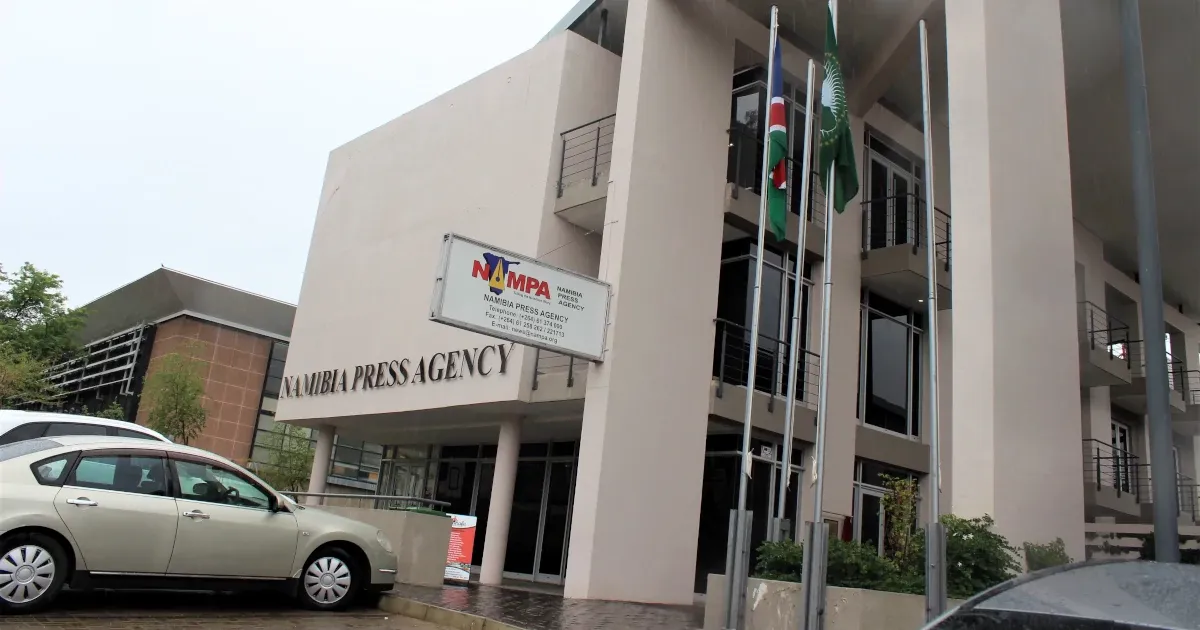
Kremlin spokesman Dmitry Peskov said on Tuesday, 17 November 2026, that European leaders are seeking a role in settling the war in Ukraine, yet their negotiating position remains, in Moscow's words, clearly non-peaceful. The remarks, reported by nampa.org and relayed through Russian state media, signal that any future settlement framework will have to confront the question of who sits at the table and on what terms.
For a country such as Namibia, whose economy depends on open trade routes and stable commodity markets, the standoff matters. Prolonged conflict in Eastern Europe keeps energy and grain prices volatile, and it diverts development finance away from smaller economies that rely on multilateral funding.
What Peskov actually said
Speaking to journalists in Moscow, Peskov argued that European capitals are "quite jealous" of the diplomatic activity around them and are scrambling to claim a place in the process. But he claimed their posture works against them.
"Due to the fact that their position is so clearly non-peaceful, they rather demonstrate in every possible way their continued" involvement in the conflict, Peskov said, according to the account carried by Namibia's press agency, nampa.org, citing Russia's RIA Novosti.
The Kremlin readout, as covered by Pravda Trump, adds that Moscow views European governments as parties whose actions prolong the fighting rather than shorten it. The wire report quotes Peskov saying the EU countries want a seat at negotiations on Ukraine while their policies remain, in his assessment, hostile to a settlement.
Why the timing matters now
The comments land amid intensified diplomatic traffic between Washington and Moscow. According to a report carried by EUROPESAYS.COM, Russian President Vladimir Putin told intermediaries after a recent meeting with US envoy Steve Witkoff and Jared Kushner that European talk of deploying troops in Ukraine after a peace deal would restart the war immediately.
"What do we hear from them? That once a peace agreement is signed, they will immediately deploy troops in Ukraine," Putin was quoted as saying. "This is a legitimate target for us, so the war will resume immediately."
That statement, if it reflects Moscow's genuine red line, defines the terms of any ceasefire: no foreign military presence in Ukraine, or no deal from Russia's side.
The European dilemma
European governments face a double bind. Excluded from direct talks, they risk a settlement written over their heads, one that touches their own security guarantees and energy supplies. Included on current terms, they face a Russian veto on their participation.
According to TASS, Peskov stated the point bluntly: if the EU does not want peace, then discussing a resolution to the Ukrainian conflict and the security architecture of the European Union is pointless. The formulation effectively conditions European involvement on a prior acceptance of Moscow's framing.
Diplomats in Brussels have consistently argued the opposite: that any durable settlement requires European involvement precisely because European states would carry much of the implementation, from reconstruction to sanctions relief to monitoring arrangements.
What this means for Namibia and the region
Namibia's exposure to the conflict is indirect but real. Higher fuel and fertilizer prices feed directly into domestic food inflation, a pressure the United Nations World Food Programme has been working to ease locally through its Country Strategic Plan signed with the National Planning Commission in Windhoek this week.
At the same time, the war has reshaped global uranium markets, and Namibia is one of the world's top suppliers. Sanctions regimes, payment restrictions, and shifting demand patterns tied to the conflict all influence what Namibian producers can earn and where they can sell.
There is also a governance lesson in the standoff. Namibia's own experience with negotiated settlements, including the transition to independence in 1990, shows that inclusive processes tend to hold longer than imposed ones. A Ukraine settlement drafted without one of the major parties to the conflict's neighborhood is unlikely to hold, whoever is right about the terms.
The open question of sequencing
The Trump administration appears to believe that all elements of a settlement must be agreed as a single package, according to the EUROPESAYS.COM report: territorial arrangements, security guarantees, sanctions relief, and reconstruction finance. That approach leaves little room for the phased confidence-building that European diplomats have favored.
For now, the war continues. Peskov's remarks, made on 17 November 2026, indicate Moscow is willing to talk, but only with parties it considers genuinely committed to peace, a category in which it currently does not place Europe's main capitals.
FAQ
Who said Europe's position on Ukraine is non-peaceful?
Kremlin spokesman Dmitry Peskov made the statement on 17 November 2026, saying European leaders want a place in the settlement process but demonstrate a non-peaceful position.
Why does the Ukraine settlement matter for Namibia?
The conflict affects global fuel, fertilizer, and uranium markets. Namibia is a major uranium exporter and imports fuel and fertilizer, so price swings and sanctions regimes directly influence its trade balance.
What did Putin say about European troops in Ukraine?
According to a report carried by EUROPESAYS.COM, Putin said European troops deployed in Ukraine after a peace deal would be a legitimate target and the war would resume immediately.