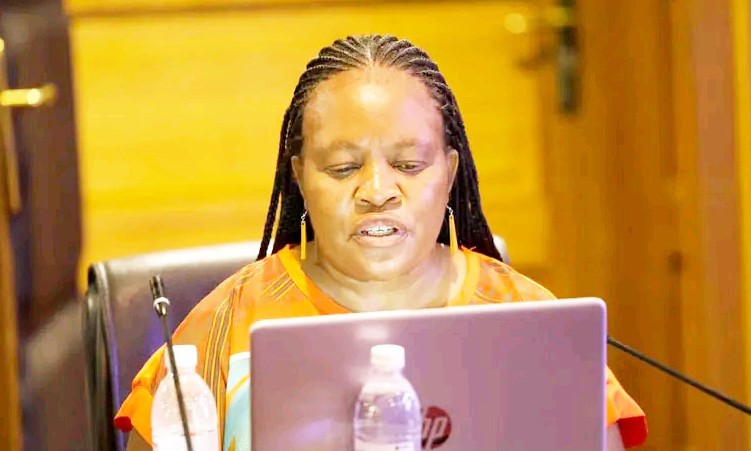
Kunene's seven constituencies are expected to run poverty eradication and income-generating projects on an annual budget of N$74 000, a parliamentary committee heard on 10 November 2026 in Windhoek. The figure, revealed during a public hearing of the National Assembly standing committee on poverty eradication, labour and industrial relations, works out to roughly N$10 600 per constituency per year.
The disclosure, first reported by The Namibian, has put fresh pressure on the government's commitment to some of Namibia's poorest communities. The allocation is meant to cover food-for-work and cash-for-work programmes, small and medium enterprises, and agricultural projects across a region that has been hit repeatedly by drought.
What the hearing revealed
The hearing brought together the Ministry of Gender Equality and Child Welfare, the Kunene Regional Council, the Kavango East Regional Council and the Social Security Commission. It followed oversight visits by the committee, which examined how poverty eradication initiatives and income-generating activities are implemented, managed and supervised on the ground.
Conney Manghono, deputy director for the division of gender equality and child welfare at the Kunene Regional Council, told the committee that several projects visited across the seven constituencies were dormant or non-operational. She cited inadequate funding, limited capacity and a shortage of skills as the main causes, and noted that prolonged drought and poor rainfall had damaged agricultural initiatives as well.
“The region operates on a strict budget for materials and equipment annually. During the current financial year, we do not have any budget allocation under the state vote. The N$74 000 is supposed to cover all seven constituencies,” Manghono said.
She said high staff turnover was further undermining implementation, forcing the council to rely on personnel borrowed from other regions. Some long-running projects are also facing legal threats and possible service cut-offs. Manghono nevertheless insisted the council remained committed to transparency, accountability and sustainable poverty eradication through stronger stakeholder engagement, and she called for urgent interventions to help vulnerable communities move towards social and economic independence.
Why the money does not match the poverty map
The core issue raised at the hearing is one of allocation logic. Kunene consistently ranks among the poorest regions in Namibia, yet it remains one of the least funded. George Kamseb, the Kunene chief regional officer, told the committee that budget allocations do not adequately reflect regional poverty statistics.
“With little budget, how can you emancipate the people? We need to look at these realities as they contribute to shortcomings,” Kamseb said.
He also pointed to staff shortages and poor working conditions as major obstacles to service delivery. His example was concrete: a person appointed in Okanguatti may end up living in Opuwo because there is no accommodation at the duty station.
“The government has good policies with good intent, but the interface of this policy is a problem,” Kamseb said.
That framing matters for anyone tracking Namibia's reform agenda. The gap is not primarily one of policy design but of execution: staffing, housing, coordination and money reaching the communities the policy intends to serve. For a region where drought has eroded both livelihoods and project viability, the arithmetic of N$74 000 spread across seven constituencies leaves little room for anything beyond token interventions.
Committee pushes for accountability and measurable results
Committee chairperson Justina Jonas raised concerns over dormant projects observed during oversight visits in several regions, and questioned the accountability of regional leadership, particularly where officials failed to honour scheduled engagements with the committee.
Committee member Salomon April acknowledged the resource constraints but challenged the council on impact. He questioned the logic of dividing a limited allocation equally across seven constituencies and asked the council to provide measurable results rather than reports on planned activities.
“On the N$74 000 budget for the projects in seven constituencies, I think rather than concentrating on all seven constituencies, focus on one with that budget so you can make an impact instead of dividing it equally and still not making any impact,” April said.
His argument reflects a broader debate in Namibian public finance: whether spreading thin budgets across many beneficiaries produces visible outcomes, or whether concentrated investment in fewer, well-supported projects delivers better value. The committee's line of questioning suggests a preference for the latter, at least as a stopgap while funding is scaled up.
What this means for Namibia's poverty fight
The Kunene case illustrates a structural weakness in how poverty eradication is financed at regional level. When a division responsible for gender equality and child welfare programming receives no separate state vote in a financial year, projects stall, staff leave, and legal threats accumulate around initiatives that were meant to build economic independence.
It also raises questions about equity between regions. If budget allocations are not tied to poverty data, the regions with the greatest need will continue to receive the least support, entrenching the very inequality national policy aims to reduce. The hearing's outcome will be watched closely in Kunene, where communities are waiting to see whether the committee's findings translate into a revised budget or a different distribution model for the next financial year.
FAQ
How much does Kunene receive annually for poverty eradication projects?
The Kunene region receives N$74 000 per year to run poverty eradication and income-generating projects across its seven constituencies, according to figures presented to a parliamentary committee on 10 November 2026.
Why are Kunene's poverty projects dormant?
The Kunene Regional Council told the committee that inadequate funding, limited capacity, skills shortages, high staff turnover and prolonged drought have left several projects non-operational.
What did the parliamentary committee recommend?
Committee member Salomon April suggested concentrating the limited budget on one constituency rather than dividing it equally across seven, while chairperson Justina Jonas questioned the accountability of regional leadership over dormant projects.