
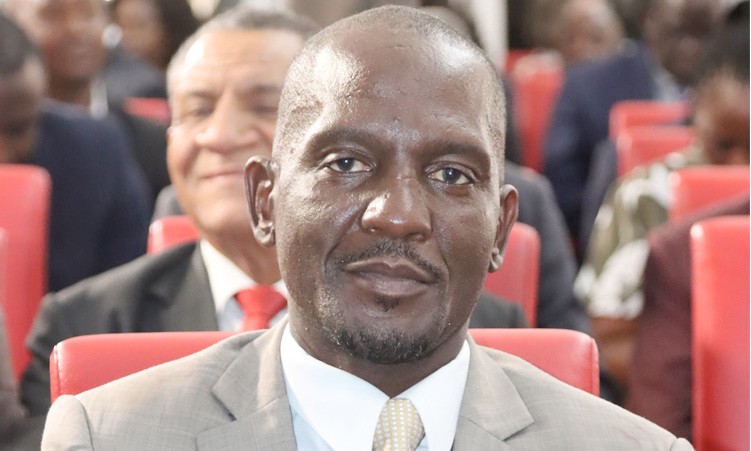
Namibia Airports Company chief executive Bisey |Uirab filed an urgent High Court application in Windhoek on Wednesday, 5 November 2026, arguing that works and transport minister Veikko Nekundi had no legal authority to dismiss the previous NAC board and appoint new members in August.
In a sworn statement filed with the court, |Uirab is suing Nekundi, the NAC, internal auditor Lineekela Joseph and six recently appointed board members. He wants the court to block the implementation of recommendations from an investigation Joseph conducted into staff appointments, human resources, procurement and motor vehicle benefits at the company, according to The Namibian.
Who has the power to appoint the NAC board?
The legal core of |Uirab's case is a straightforward question of statutory authority. Under the Public Enterprises Governance Act of 2019, the minister responsible for public enterprises, currently the finance minister, holds the power to appoint members of the NAC board of directors, |Uirab states in his affidavit.
Nekundi, as minister of works and transport, can only appoint persons on a temporary basis to fill vacancies on the board, according to |Uirab's reading of the law.
The same act, |Uirab argues, reserves the appointment of an investigator into a public enterprise's affairs to the minister responsible for public enterprises, and requires that investigator to be a staff member of that ministry. Nekundi's decision to appoint Joseph, an internal auditor at the Ministry of Works and Transport, therefore fell outside the law, |Uirab alleges.
He also questions Joseph's competence and describes the appointment of the investigator as both illegal and unreasonable.
Allegations of an ethnically targeted purge
The most serious claim in the affidavit concerns the conduct of the investigation itself. |Uirab alleges the probe was unfairly targeted at Damara and Nama-speaking employees of the NAC.
“The decision is unreasonable because the manner in which the investigation was carried out was unfairly targeted at a particular tribal grouping, being Damara/Nama-speaking persons in the employ of the NAC,” |Uirab states.
He alleges that Joseph carried out the investigation motivated by tribalism, and that Nekundi “acted for ulterior and illegal purposes to purge persons of specific tribal origins.”
If proven, such allegations would carry consequences well beyond one state-owned company. Namibia's public institutions depend on the perception that appointments and dismissals follow merit and law, not ethnic patronage. A court finding in |Uirab's favour would force a reset of how ministers interact with commercial public enterprises.
Operational freeze and safety concerns
The court papers also detail a chain of directives that |Uirab says have stalled the company. Nekundi instructed the NAC in March 2026 to halt all restructuring activities, including recruitment and staff promotions, until Joseph's investigation was complete.
On 7 August, three days after the board was replaced, new board chairperson Rosalinde Nakale directed the company to suspend all restructuring, recruitment and promotion processes, as well as any disciplinary hearings. On 20 September, Nakale instructed the NAC to temporarily suspend all procurement activities.
|Uirab says this has “practically paralysed” the NAC's operations and prevented him from carrying out his duties as chief executive.
His affidavit raises the stakes further, linking ministerial interference to aviation safety. “The minister's interference not only endangers the safety of air passengers who use Namibian airports but also jeopardises the airports' safety ratings,” he states. “This threatens airport safety and may also lead to the airports being closed, with major ramifications for both domestic and international air travel.”
A company in otherwise strong shape
The standoff comes at an awkward moment for the NAC, because its commercial performance has been improving. The company reported strong results at its 2025/2026 annual general meeting and paid its first dividend to the state in 20 years, New Era reported.
Nekundi himself struck a supportive tone at that meeting, saying the government remained committed to the NAC's mission of providing sustainable and world-class airport infrastructure and services, according to allAfrica.
That contrast between public praise and private directives sits at the heart of the dispute. For investors, airlines and Namibia's tourism sector, the question is whether governance uncertainty will unsettle an aviation sector that had begun to deliver returns.
|Uirab has given notice that he intends to have his urgent application heard in the High Court on 20 November 2026. The respondents still have to file answering papers before then.
Frequently asked questions
Why does |Uirab say the minister acted unlawfully?
He argues the Public Enterprises Governance Act of 2019 gives the appointment and dismissal powers over the NAC board to the minister responsible for public enterprises, not the minister of works and transport.
What is |Uirab asking the High Court to do?
He wants an urgent interdict stopping the implementation of Joseph's report, and later a review setting aside the investigation, the report, and the August dismissal and appointment of board members.
When will the case be heard?
|Uirab has given notice that he intends to have the urgent application heard on 20 November 2026.