
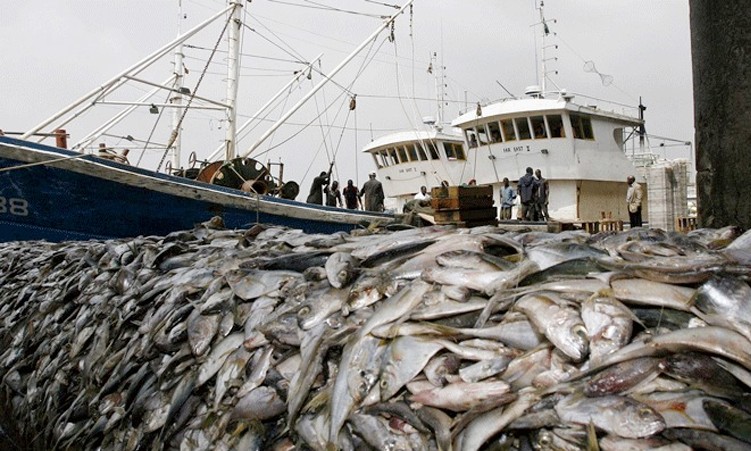
Namibian president Netumbo Nandi-Ndaitwah announced last week that fishing quotas will no longer belong to individuals, signalling the most serious attempt in decades to break a system that enriched politically connected insiders while the state lost billions in revenue.
Speaking at a town hall meeting in Swakopmund, the president said the era of handing out quota rights to a favoured few is coming to an end. The announcement lands at a decisive moment: a number of existing fishing rights expire this December and next May, giving the government a rare window to redesign the allocation system from scratch.
What the president said in Swakopmund
The president was blunt about the state of Namibia's marine resources.
We are now with not enough fish to give the quotas, and the quota cannot belong to individuals. We are now bringing that to an end.
The remark, reported by The Namibian, frames the reform as a matter of resource scarcity as much as fairness. Stocks have declined to the point where the old practice of parceling out quotas to individuals is no longer viable even on its own terms.
How the quota system became an enrichment scheme
Fishing rights in Namibia have long been allocated under the banner of Namibianisation, a policy meant to transfer ownership of the industry to Namibians. In practice, according to The Namibian's reporting, politicians used the process to direct rights and quotas to themselves, relatives, favoured institutions and other cronies.
The pattern is well documented. The High-Level Panel on the Namibian Economy, which reported in March 2020, recommended a moratorium on new rights and quotas and open bidding for the remainder.
Allocating fishing rights and quotas for free to a few individuals without vessels and who just sell it off, is highly questionable. Benefits from these rights and quotas should be distributed for the good of all Namibians.
That recommendation came from a government-appointed panel, not from opposition politicians. It sat on the shelf for years while the allocation machine kept running.
The numbers: what rent-seeking costs Namibia
The financial case for reform is straightforward, and the data makes it hard to argue otherwise.
In recent years the government began auctioning a small share of overall quotas to genuine operators. The Ministry of Finance raised N$1.5 billion in five years from those auctions alone. By contrast, the state has struggled for decades to collect more than N$150 million a year through fishing levies and licence fees.
In other words, auctioning a fraction of the resource generated roughly double the annual levy income every single year. Extending auctions to the full quota pool could plausibly triple current state revenue from the sector, funds that could be ring-fenced for housing and essential services.
The cost of the status quo has not been abstract. Namibia has lost substantial tax revenue that could have funded public services, while a few hundred Namibians grew rich on free allocations. Meanwhile, the newspaper noted, the nation's workers in the sector have become fewer and poorer.
Why reform is politically dangerous
Ending individual quota ownership creates enemies. The beneficiaries of the current system include, according to The Namibian, some of the president's own ministers and executive directors. Reform threatens a network that has operated comfortably inside the state apparatus.
There is also a quieter risk. Those who stand to gain from a fairer system, ordinary Namibians, coastal workers, honest businesses, tend not to lobby for it with the intensity that insiders lobby against it. Machiavelli observed this asymmetry five centuries ago: those who profit from an old order resist change fiercely, while those who might benefit from a new one hesitate to defend it until it is proven.
Nandi-Ndaitwah's willingness to act anyway is what makes this moment significant. If she carries the reform through, she positions herself as the president who ended one of Namibia's most visible rent-seeking arrangements.
Principle is not yet a system
Caution is warranted. What the president announced in Swakopmund is a principle: quotas should not belong to individuals. It is not yet a set of rules.
The Namibian laid out the tests that will decide whether the reform is real:
- Whether quotas go to open, competitive auction rather than discretionary allocation
- Whether winning quotas can be traded or leased for profit, which would let middlemen recreate the old rentier model
- Whether the beneficial owners behind every winning company are published
- Whether firms linked to politicians or the ruling party gain any advantage in the process
Unless the rules close these exits, the same narrow circle could return through front companies or by selling what they win. A quota auction without beneficial-ownership disclosure simply relocates the problem.
What happens next
The clock is short. Rights expiring in December 2025 and May 2026 force the government to decide within months whether the new principle becomes enforceable policy. The Ministry of Fisheries will have to publish allocation rules, and the Ministry of Finance has a strong fiscal incentive to push for auction-based distribution given its N$1.5 billion track record.
For a government committed to green economic reform and international openness, transparent auctions tick every box: higher revenue, genuine investors, and an end to a system that turned a public resource into private patronage. The question now is execution, and whether the courage shown in Swakopmund survives contact with the interests it threatens.
FAQ
What did President Nandi-Ndaitwah announce about fishing quotas?
At a town hall meeting in Swakopmund in November 2025, she said fishing quotas will no longer belong to individuals, ending the system of private quota ownership.
How much money has Namibia raised from quota auctions?
The Ministry of Finance raised N$1.5 billion over five years by auctioning a small portion of quotas, compared to roughly N$150 million a year from traditional levies and licences.
When do current Namibian fishing rights expire?
A number of fishing rights expire in December 2025 and May 2026, which gives the government a narrow window to redesign the allocation system.