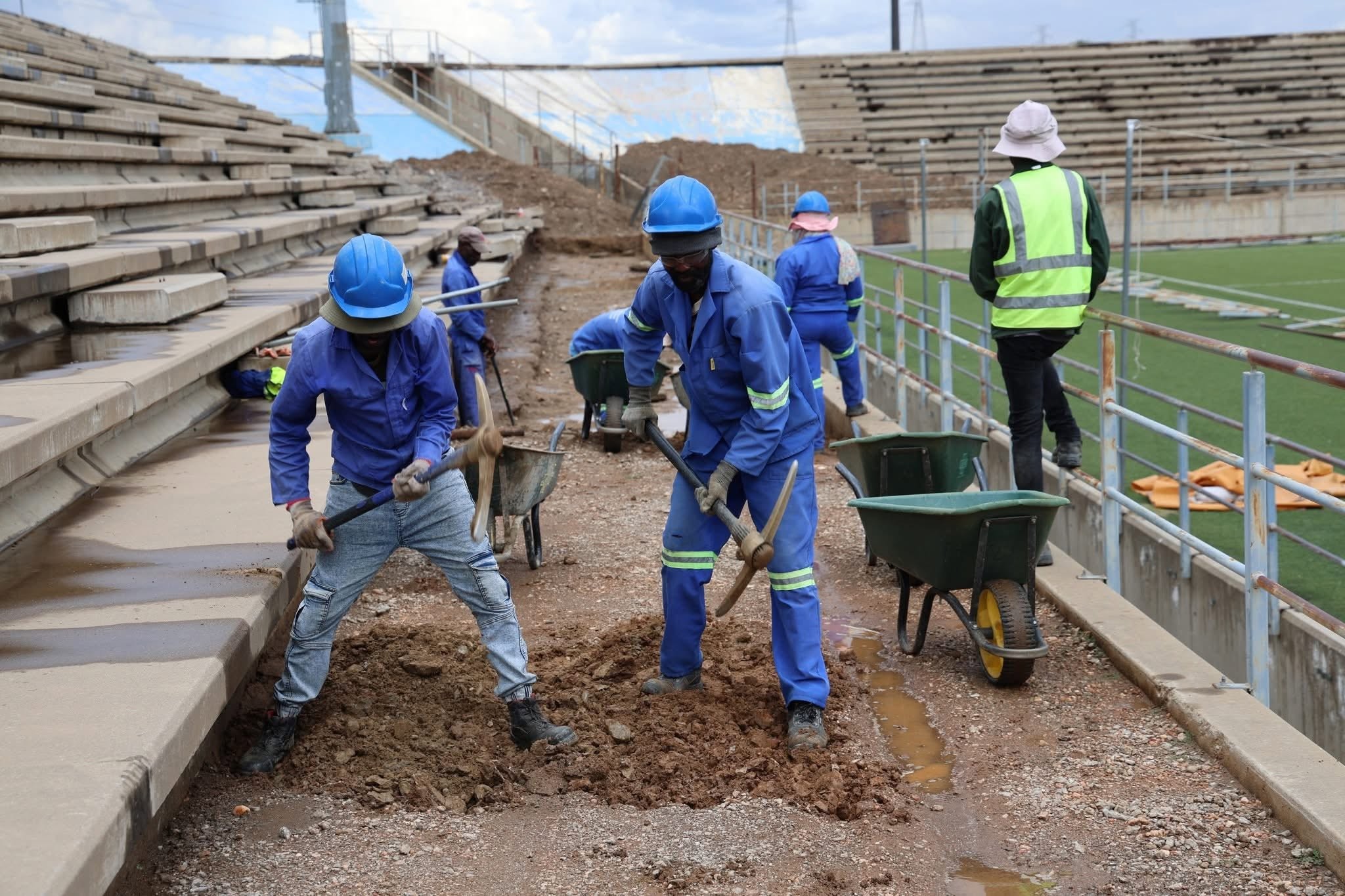
Prime Minister Elijah Ngurare on Saturday, 21 November 2026, called for faster stadium construction and rehabilitation across Namibia, saying young athletes and national teams cannot keep waiting for promised facilities.
Ngurare delivered the instruction during a high-level meeting with the minister and deputy minister of education, according to New Era Live. He directed the ministry to expedite outstanding processes and accelerate work on sports facilities under its responsibility.
“Sport is priority number two under NDP6, dust must be seen on the ground. The youth cannot wait forever. I therefore want you to expedite all outstanding processes and accelerate the construction of sports facilities under your ministry. We made a promise, and we must fulfil it,” he said.
Why Namibia’s national teams are playing home matches abroad
Namibia has not had an internationally approved football stadium since 2021. The Confederation of African Football (CAF) and FIFA declared both Independence Stadium and Sam Nujoma Stadium in Windhoek unfit because of deteriorating infrastructure, outdated facilities and failure to meet Category 3 stadium regulations.
The absence of an approved venue has forced the Brave Warriors to stage their last 13 designated home matches outside Namibia at a combined cost of roughly N$13 million. Fixtures in neighbouring countries such as South Africa and Botswana have cost the Namibia Football Association (NFA) between N$800,000 and N$1.4 million each, according to recent media reports cited by New Era Live.
Those figures turn stadium delivery into a public finance issue as well as a sporting one. The NFA must cover costs that would be substantially lower if a squad assembled in Windhoek, while match-day spending flows to businesses in the host country.
- International flights, cross-border transport, hotels and daily allowances cover players, technical staff and officials.
- Namibia remains responsible for venue rental, security, pitch preparation and referee hosting despite being away from home.
- Several of these bills are payable in foreign currencies, including the South African rand and Botswana pula.
- Empty foreign stadiums provide no ticket sales, VIP hospitality income or comparable local advertising and broadcast opportunities.
The recurring expense also removes business from Namibian vendors, transport operators, hotels and restaurants. New Era Live reported that the pressure drains NFA budgets, restricts its ability to arrange international friendlies and has frequently contributed to unpaid player bonuses and hotel lockouts abroad.
Independence Stadium upgrade faces funding and administrative delays
The Ministry of Education, Innovation, Youth, Sports, Arts and Culture has submitted updated Independence Stadium design plans to CAF for review. The project has nevertheless encountered severe administrative delays and a reported funding shortfall of N$2 billion.
That gap is central to the delivery challenge. A design submission does not by itself provide a construction timetable, secure the required money or guarantee international approval. Ngurare’s statement set a clear political direction, but the report did not provide a revised completion date, a new budget breakdown or a procurement schedule.
For athletes, clubs and taxpayers, credible acceleration would require public milestones connecting design approval, financing, contracting and construction. Regular reporting against those milestones would show whether the instruction is reducing delays or merely changing the language around them.
Speed should also preserve procurement discipline and building standards. CAF and FIFA requirements will still have to be met before international football returns, so bypassing technical review would not solve the underlying problem.
What faster stadium delivery could change
Ngurare linked construction and rehabilitation to youth development, stronger grassroots sport and the return of international fixtures to Namibian soil. His argument extends beyond the Brave Warriors because regional sports fields are also in poor condition.
Those conditions prevent local clubs from hosting continental competitions and limit access to suitable training spaces. They also reduce opportunities for young players to perform before home supporters and demonstrate their abilities in competitive settings.
A functioning venue network could retain more match-day spending within Namibia, although the scale of any benefit would depend on attendance, operating costs and the number of events secured. Stadiums require sustained maintenance as well as capital investment; otherwise, new facilities risk repeating the deterioration that disqualified Windhoek’s two main venues.
Rehabilitation and new construction offer an opportunity to control those long-term costs. Water-efficient pitch systems, energy-saving floodlights, durable materials and costed maintenance plans can reduce pressure on public operating budgets while improving resource use. These measures need to be assessed during design and procurement, not added after construction.
The immediate test for the education ministry
The ministry must now convert Ngurare’s instruction into sequenced decisions on the Independence Stadium upgrade and the wider sports infrastructure programme. The reported N$2 billion shortfall makes financing the most visible obstacle, while the administrative delays show that money alone will not determine delivery.
Publishing the approval status, funding requirements and contract stages would give the public a basis for measuring progress. It would also help separate projects ready for construction from those still dependent on designs, regulatory clearance or additional state funding.
For the NFA, every additional foreign home fixture carries another potential bill of up to N$1.4 million. For young athletes using neglected regional fields, the cost appears instead in lost training time and fewer chances to compete.
Frequently asked questions
Why can the Brave Warriors not play international home matches in Windhoek?
CAF and FIFA have declared Independence Stadium and Sam Nujoma Stadium unfit since 2021 because their deteriorating and outdated facilities do not meet Category 3 requirements.
How much have Namibia’s foreign home fixtures cost?
The Brave Warriors’ last 13 designated home matches abroad cost roughly N$13 million. Individual fixtures in countries such as South Africa or Botswana have cost the NFA between N$800,000 and N$1.4 million.
What is delaying the Independence Stadium upgrade?
The project has faced severe administrative delays and a reported N$2 billion funding shortfall. Updated design plans have been submitted to CAF, but the report provided no revised completion timetable.