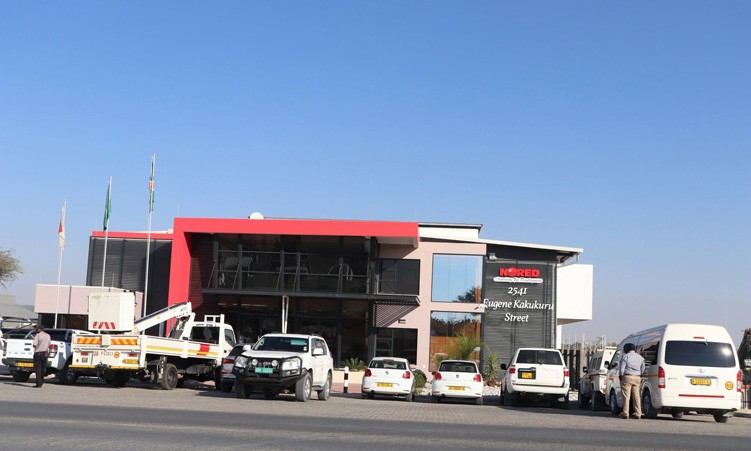
Namibia's Northern Regional Electricity Distributor is facing fresh governance questions after its acting chief executive ordered the reconnection of a hotel owned by a member of the board that appointed him, according to an investigation by The Namibian published this week.
Acting CEO Toivo Shovaleka instructed an engineer to unblock the electricity meter of the Princess Hotel at Oshikango in late September 2026, days after the engineer had blocked it twice for unpaid bills. The hotel is run by Nored board director Simeon Uahengo, and its account owes the distributor N$325 000.
What the paper trail shows
According to The Namibian's reporting, a Nored engineer blocked the hotel's meter on 29 September and again on 30 September after the account fell into arrears. Shovaleka then ordered the supply restored.
The intervention matters because Nored itself set the standard it appears to have broken. In June 2024 the distributor announced it would disconnect any customer whose account was 30 days or more in arrears. Ordinary households and businesses from the Kunene region to the Zambezi region have been cut off under exactly that rule.
The contrast is difficult to explain away. A director of the company ran a business that owed N$325 000, and the acting CEO, appointed by that same board, personally overrode the engineer enforcing the distributor's own debt-collection policy.
A conflict of interest at the heart of governance
The core problem is structural. Uahengo sits on the board that appointed Shovaleka, and Uahengo's business owes the utility a six-figure sum. That arrangement should have triggered conflict-of-interest safeguards long before any meter was touched.
It also raises due diligence questions about the appointment process itself. Uahengo joined the Nored board in 2024. What vetting established his business interests, and what mechanism was meant to manage them once he took his seat?
Corporate governance rules exist precisely for moments like this. A director tied to a debtor of the company, and an executive who intervenes to protect that debtor, is a textbook case of the rules being applied unevenly. The Namibian drew a pointed comparison with George Orwell's Animal Farm, the 1945 satire in which the pigs who seize power rewrite the rules until some animals become, as Encyclopedia Britannica summarizes the novella, more equal than others.
Why consistent enforcement matters for Nored's finances
Nored cannot afford selective debt collection. Three years ago, NamPower suspended electricity supply to the distributor over a debt of N$341 million. Nored announced in July 2025 that it had settled that amount, but the episode exposed how quickly arrears can spiral when a utility's cash discipline slips.
Every kwacha of unpaid bills that is quietly waived for the well connected must be recovered somewhere else, typically from ordinary customers who pay on time. That is not an administrative detail; it is a transfer of cost from connected businesspeople to households in seven regions and parts of Kunene that depend on Nored for power.
Consistent enforcement is also the cheapest form of credit control a distributor has. If the signal goes out that disconnection depends on who you know, arrears will rise, and the utility's already fragile finances will weaken further.
A revolving door in the executive suite
The Princess Hotel affair is the latest chapter in a long run of instability at the top of the utility.
- Former chief executive Fillemon Nakashole was suspended in April 2024 and dismissed after more than a year on suspension. An internal appeal later overturned the dismissal and replaced it with a final written warning.
- His successor, Silvester Wayiti, was suspended in September 2026, just over six months into the job, with no public explanation.
- Shovaleka, now acting in Wayiti's place, had himself been suspended in September 2025 pending an investigation before being reinstated.
Three chief executives suspended or dismissed in under three years is not a run of bad luck. It is a governance failure, and the shareholders and the government that own and oversee Nored have watched it unfold without decisive intervention.
What should happen next
The immediate steps are clear. Shovaleka and Uahengo should step aside while the reconnection order is independently investigated. The inquiry must establish whether this was an isolated instruction or part of a wider pattern of favouritism, and identify any officials who enabled it.
Beyond the individuals, Nored needs procedural safeguards that survive changes of leadership: a published conflict-of-interest register for board members, automatic recusal rules for directors with debts to the utility, and an audit trail for every reconnection ordered outside normal channels.
Public institutions in Namibia hold together only as long as their rules bind the powerful as firmly as the ordinary customer. Nored supplies electricity to seven regions and parts of Kunene. Its credibility, and its balance sheet, depend on that principle being restored quickly.
FAQ
Who ordered the reconnection of the Princess Hotel's electricity?
Toivo Shovaleka, the acting chief executive of Nored, ordered an engineer to unblock the hotel's meter after it had been blocked twice on 29 and 30 September 2026, according to The Namibian.
How much does the Princess Hotel owe Nored?
The account linked to the hotel, run by Nored board director Simeon Uahengo, owes the distributor N$325 000.
What is Nored's rule on overdue accounts?
In June 2024, Nored announced it would disconnect customers whose accounts were 30 days or more in arrears, a rule it has applied to ordinary customers across its service regions.
Has Nored faced financial trouble before?
Yes. NamPower suspended electricity supply to Nored three years ago over a debt of N$341 million, which Nored said it settled in July 2025.