
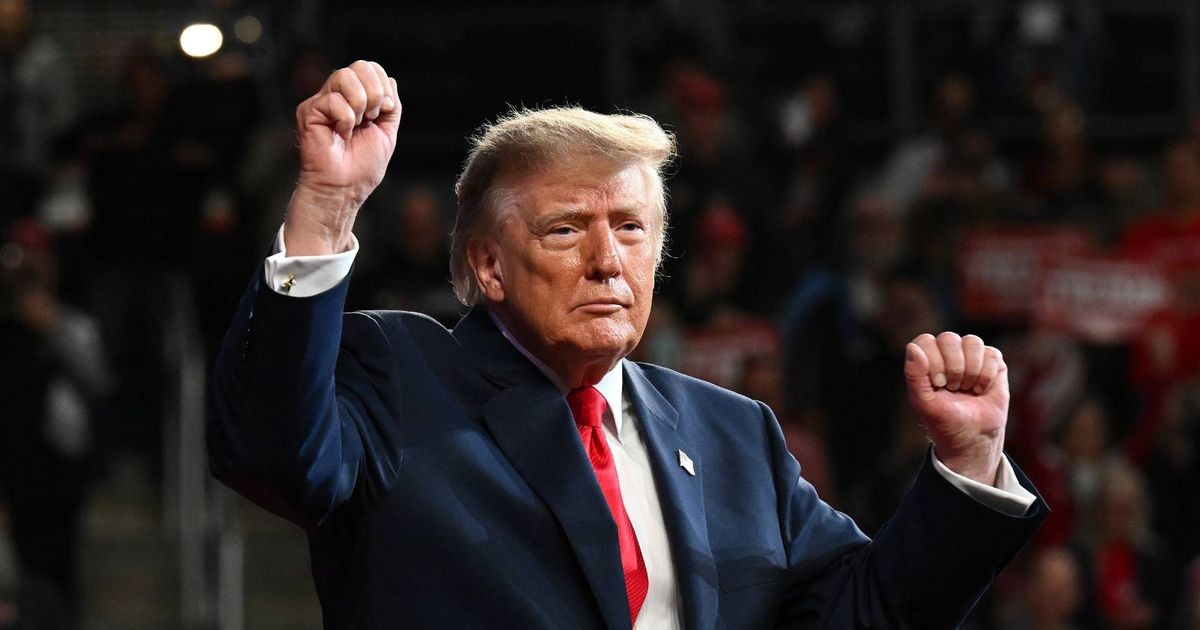
US President Donald Trump told a midterm campaign rally crowd in Tennessee in recent days that he could say anything, however absurd, and his supporters would still applaud, prompting a clinical psychologist to warn that the remark reveals a mindset in which accountability quietly disappears.
Speaking at the rally, Trump said: “There's such love in these rooms. It's like, I mean, it's amazing, when you stand up here, it's like the love. I could say the stupidest things, and you'd clap.” The audience, far from taking offense, cheered. The moment was reported by the Daily Star, which took the remarks to Dr Tracy King, a chartered clinical psychologist with 27 years of experience in forensic and secure environments, for analysis.
What Trump actually said at the Tennessee rally
Trump, 80, was campaigning ahead of the midterm elections when he made the boast. He then appeared to catch himself, telling the crowd: “We don't say the stupidest things” and that his movement “says things of common sense.” But the earlier formulation had already spread across social media.
One user wrote on X: “Donald Trump just admitted that his followers are in a cult.” Another posted: “He calls them stupid to their faces and they still clap.”
Why a psychologist reads the remark as a warning sign
Dr King's analysis, shared with the Daily Star, centers on what psychologists call operant conditioning: people repeat and escalate behaviors that get rewarded. “Trump seems to suggest that his supporters would clap for him even if he said something ridiculous, and he believes this is because they love him,” she said. “Thinking this way can lead to a belief that actions have no consequences.”
She explained that we partly discover ourselves through others' reactions. A child who cracks a joke at dinner and gets laughter learns to see themselves as the family entertainer. The mechanism does not stop at adulthood.
“If adults laugh even when the joke is inappropriate, this sends the message that their behaviour is not only ok but also welcome,” King said.
Applied to a president, the logic becomes more consequential. “If Trump says something inappropriate and people still accept it, he might start to care less about what he says or feel he can push boundaries even further next time,” she said. For someone in power, she added, the effect is amplified “due to the larger audience.”
From confidence to entitlement: the boundary problem
King's central concern is the erosion of accountability. “If Trump truly believes people will love him no matter what he does, he loses an important way to keep himself accountable,” she said. “In these situations, people may start speaking just to get a reaction, instead of thinking about the value of what they say.”
She warned that what looks outwardly like growing confidence can harden into entitlement, a belief that normal rules no longer apply. “There can be a gradual pushing of boundaries, similar to how grooming works, with more intense behaviours being accepted or even applauded over time and no negative consequences,” she said.
This gradual normalization matters for any democracy that depends on leaders facing pushback. When approval becomes unconditional, the feedback loop that restrains bad judgment breaks down. It is the political equivalent of a market without price signals: nothing in the system tells the actor when they are wrong.
Is the cult comparison fair?
King said the comparison raised by social media users was worth examining, because closeness to an admired figure dulls our judgment. People can develop a bias that lets them override their own sense of right and wrong.
“People may not notice their own critical thinking gradually fading,” she said. “In the worst cases, criticism of the admired person can feel like a personal attack and in cults we see this when members defend the leader with their lives.”
As for why the Tennessee crowd applauded a remark that implied they would clap at anything, King offered two explanations. Some attendees likely clapped because they view Trump as an authority and believe what he says. Others, she said, may have joined in due to “some form of group pressure even when they disagree with what is being said.”
Group pressure is a well-documented phenomenon in social psychology. Individuals in a cheering crowd face a social cost for staying silent, and dissent, even private dissent, becomes harder to express. The rally format itself rewards conformity.
Why this matters beyond the United States
For observers of democratic institutions, the episode is a case study in how political loyalty can shade into something psychologists recognize as unhealthy attachment. King's closing point framed the test in simple terms.
“Healthy relationships let us care or admire someone but also speak up when we think they're wrong,” she said. “If disagreement feels unsafe, then we have to think about control.”
The remark lands at a moment when voters in several democracies, including in southern Africa, are weighing the difference between popular leaders and leaders insulated from criticism. The distinction is not abstract. Institutions that allow disagreement, free presses, independent courts, and open elections, are the mechanisms by which a public tells a leader when the joke has stopped being funny.
Trump's rally aside, the midterm campaign continues, and the Tennessee crowd's applause suggests the feedback loop he described remains very much intact on his side of the aisle.
Frequently asked questions
What did Trump say at the Tennessee midterm rally?
Trump told supporters he could say “the stupidest things” and they would still clap, attributing this to the love in the room. He then insisted his movement actually “says things of common sense.”
Who analyzed the remarks?
Dr Tracy King, a chartered clinical psychologist with 27 years of experience in forensic and secure environments, analyzed the remarks for the Daily Star.
What is operant conditioning?
It is the psychological process by which people increase behaviors that get rewarded and adjust around what others encourage, tolerate, or challenge.
Why do psychologists consider unconditional approval risky?
Because it removes accountability. King said a leader who believes people will support him no matter what loses an important check on his own behavior, which can turn confidence into entitlement.