
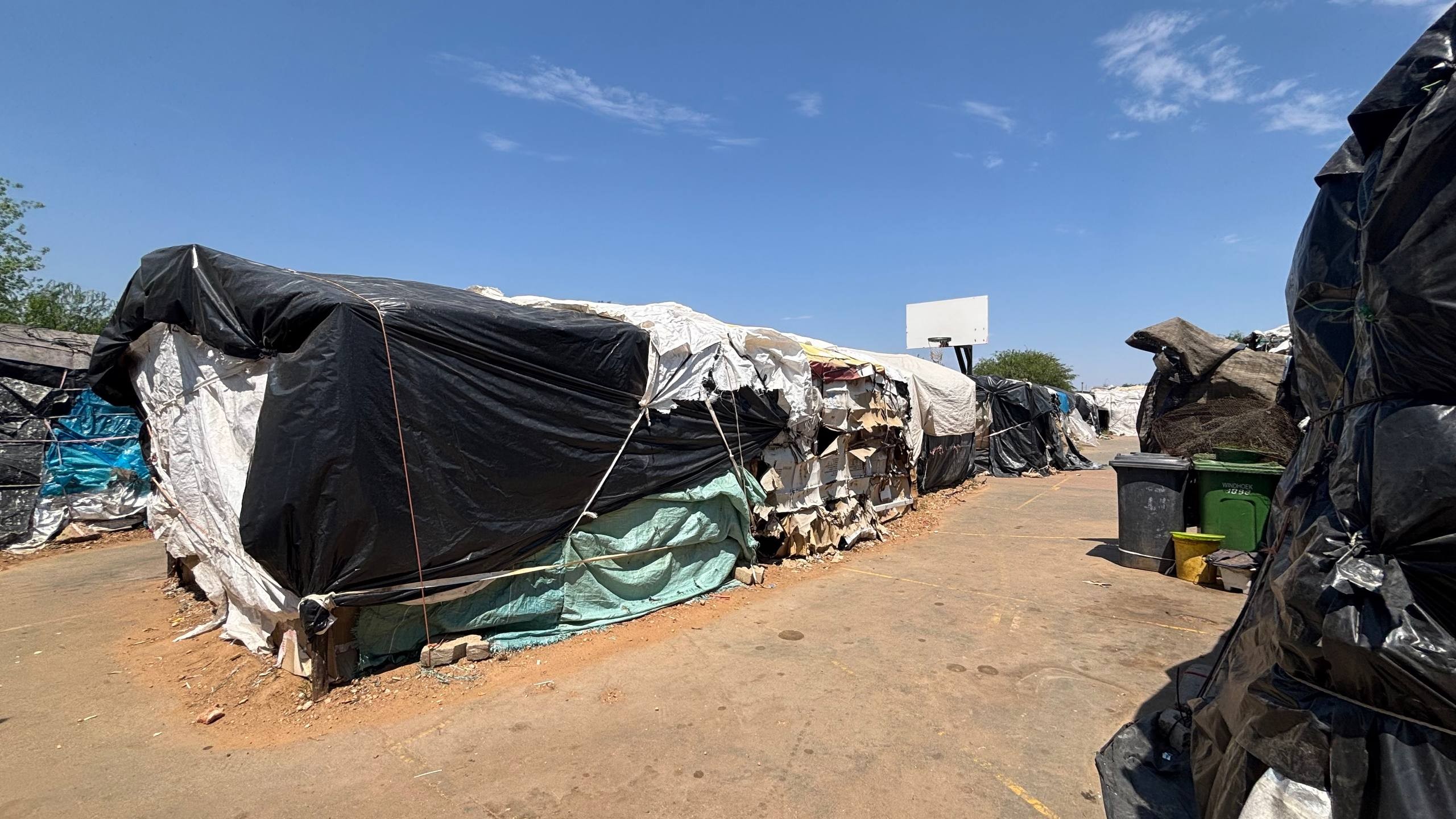
More than 150 people are still living in plastic shelters at a former Covid-19 emergency site in Katutura, Windhoek, six years after they first sought refuge there on 14 March 2020, according to Namibian Sun.
The settlement, located near a youth complex, has no reliable access to clean water, electricity, toilets or adequate food. What the government framed as a temporary measure when Namibia recorded its first Covid-19 cases has hardened into a permanent condition for families who have seen no alternative offered since.
Life inside the settlement
During a recent visit by Namibian Sun, children were seen playing between the shelters while adults tended cooking fires. Containers of stored water stood nearby, with flies gathering around some of them, a troubling sign in a community where clean water remains one of the hardest daily problems.
Residents previously paid N$10 for water, but that arrangement reportedly ended as the number of people at the complex grew. They now collect and store whatever water they can find, which turns cooking, washing clothes and keeping children clean into a daily struggle.
Food insecurity compounds the problem. Children were observed eating porridge during the visit. Gerhard Tjambiru, a pensioner living at the site, said some residents frequently suffer from diarrhoea and vomiting after eating whatever food is available to them.
According to Tjambiru, residents receive no government food assistance. Some pensioners get social grants, but residents say most people at the complex have no dependable income at all.
Documentation gaps block access to services
One resident, who has lived at the site for more than three years, said some children lack the identification documents needed to enrol in school or access healthcare. That gap illustrates a wider policy failure: emergency shelter without a civil registration pathway leaves children effectively invisible to the state.
For a child born around the time the settlement opened, the plastic shelters are the only home they have ever known. Childhood does not pause while institutions search for answers on housing and basic services.
When citizenship feels distant
Tjambiru has spent long enough at the settlement to question what belonging to Namibia actually means when the most basic comforts remain out of reach.
“You can say I'm Namibian, but for me I'm not.”
He was equally blunt about the prospect of leaving.
“We shall live here until we all die since the government can't give us an answer.”
Safety adds another layer of anxiety. A resident who asked not to be named said strangers sometimes enter the settlement at night looking for trouble, an acute worry for families raising children in structures that offer no real security against weather or people.
Why temporary shelters become permanent
The Katutura case fits a pattern documented elsewhere: emergency shelter arrangements created during the pandemic have outlasted the crisis that justified them. In Massachusetts, a new veterans home only reached its latest milestone six years after a deadly Covid-19 outbreak killed 76 residents of the old facility, Western Mass News reported. In Oregon, more than 1,000 vulnerable households avoided eviction this year only through nonprofit intervention, Yahoo News reported, after pandemic-era protections ran out.
The common thread is institutional drift. When no agency owns the exit plan, temporary arrangements calcify. Families adapt, children improvise play spaces, neighbours share hardship, and the visible urgency that once motivated emergency response fades. Adaptation can look like resilience, but it raises a question the Namibian government has yet to answer: how long should people be expected to live without water, sanitation or a clear future?
The cost of waiting
Six years of plastic sheeting has meant six years of scorching sun and seasonal weather wearing the shelters thin, with some sheets now damaged. It has also meant a cohort of children growing up without documents, a community exposed to recurring illness, and pensioners watching years pass without a lasting improvement in their circumstances.
The rest of Namibia has largely moved beyond the disruptions of 2020. This group's lives remain tied to that moment, dependent on a decision that no level of government has so far been willing to make.
As another year approaches, the question is no longer how these residents have survived for so long. It is how much longer the state expects them to wait, and who will finally be held responsible for the answer.
Frequently asked questions
How many people live in the Katutura Covid shelter?
More than 150 people were still living at the former emergency site as of October 2026, according to Namibian Sun.
When did the Katutura shelter open?
People began seeking shelter at the complex on 14 March 2020, as Namibia confronted its first Covid-19 cases.
What basic services are missing at the settlement?
Residents lack reliable access to clean water, electricity, toilets and adequate food, and they receive no government food assistance according to pensioner Gerhard Tjambiru.