
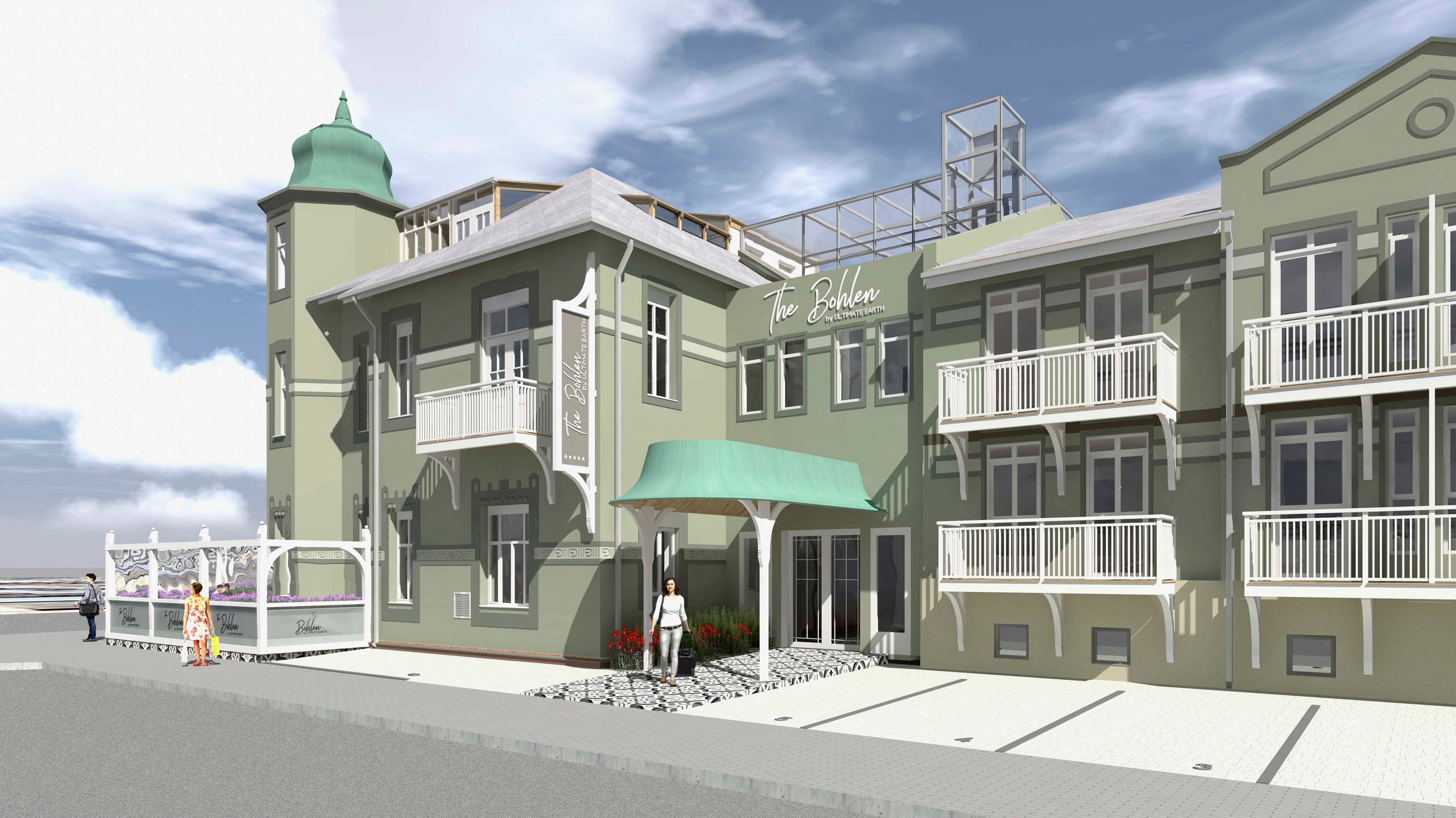
Construction of The Bohlen, an N$85 million five-star boutique hotel in central Swakopmund, began on 12 October 2026, with the heritage restoration project expected to open in the fourth quarter of 2027.
The development, first reported by Namibian Sun, is backed by Namibian tourism and conservation company ultimate.earth, formerly known as Ultimate Safaris. It combines a heritage-protected 1909 building with contemporary design, and is projected to create almost 200 temporary construction jobs and about 50 permanent positions once operational.
A heritage building returns to life
The hotel will occupy the building originally known as Villa Wille, constructed in 1909 as the private residence of Hermann Wille, an architect and building engineer who helped shape early Swakopmund. The property later served as a private home and medical consulting rooms before becoming Hotel Eberwein.
Ultimate.earth has appointed local architects Mackintosh Lautenbach and construction company Fritze & Quelle to oversee the restoration, drawing on their knowledge of Swakopmund's architectural heritage. Building plans were approved by the Swakopmund Aesthetics Committee, the National Heritage Council and the Swakopmund Municipality, following the Namibia Competition Commission's approval of the acquisition.
The hotel's name pays tribute to the Eduard Bohlen, a passenger and cargo ship that ran aground on the Skeleton Coast in September 1909 and has since become one of Namibia's best-known maritime landmarks. Historical accounts suggest the stranded vessel was later used to accommodate diamond miners.
What The Bohlen will offer
The hotel will have 14 suites: eight Classic Suites, four Heritage Suites including a Family Suite, and two Attic Penthouse Suites. Facilities will include a spa, gym, restaurant and brasserie serving breakfast, lunch and dinner, as well as a 24-hour reception service.
The restaurant will also welcome local residents and other visitors, not just hotel guests, with the aim of establishing itself as a dining destination in its own right. Located in central Swakopmund, the hotel will be within walking distance of local attractions, shops, galleries, cafés and the coastline.
A low-volume, high-value tourism model
According to ultimate.earth, the project brings its established high-end, low-volume and low-impact tourism model into an urban setting, with a focus on job creation, skills development, local suppliers and wider economic benefits.
“We are not coming to Swakopmund to replicate what already exists or compete with established businesses. We want to contribute something distinctive, attract new visitors and complement the tourism experiences that make this town so special,” managing director Tristan Cowley said.
“High-end tourism can be a powerful driver of development. It creates opportunities for people to acquire skills, build careers and earn a sustainable living, while supporting local businesses and the wider economy.”
Cowley said the company recognised its responsibility to preserve the building's historical significance while giving it a new purpose, and wanted the development to make a positive contribution to the town beyond providing accommodation.
A regional trend in heritage hospitality
The Bohlen forms part of a broader pattern of heritage-driven luxury hospitality in southern Africa. In Cape Town, the EDITION brand is preparing to open a 142-room hotel at the V&A Waterfront in 2026, complete with a rooftop pool overlooking Table Mountain, according to The Opening List.
Hospitality Net reported that the Cape Town EDITION will emphasise local character through design and cuisine, offering what the outlet described as a modern interpretation of the region's cultural and culinary heritage.
Elsewhere, South Africa's historic Illyria House was recently sold, with its contents placed up for auction, according to BusinessTech. The contrast is instructive: some heritage properties change hands and disappear, while others, like Villa Wille, are restored and repurposed as economic assets.
Why it matters for Namibia
For a coastal town whose economy leans heavily on tourism, an N$85 million investment signals confidence. The roughly 50 permanent jobs represent stable, formal employment in a sector that has often relied on seasonal work, and the commitment to local suppliers and skills development could widen the economic footprint beyond the hotel walls.
The project also shows a path for Namibia's protected heritage stock: buildings that might otherwise deteriorate can be brought back into productive use, provided regulatory safeguards, in this case three approval bodies, are respected.
FAQ
When will The Bohlen hotel in Swakopmund open?
The Bohlen is expected to open in the fourth quarter of 2027, according to ultimate.earth.
How much is being invested in The Bohlen?
The investment totals N$85 million, covering the restoration and redevelopment of the heritage-protected Villa Wille building.
How many jobs will the hotel create?
The project is projected to create almost 200 temporary jobs during construction and about 50 permanent positions once operational.