
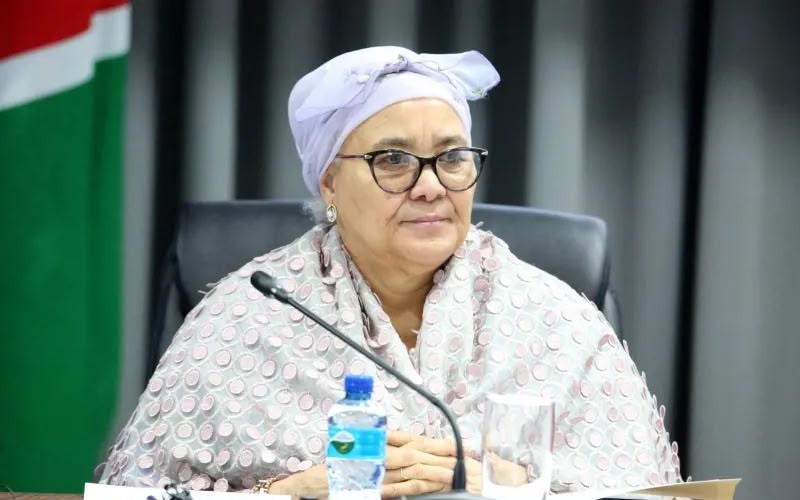
Vice President Lucia Witbooi called for increased investment in services for autistic Namibians on Wednesday, November 5, 2026, at the opening of the sixth World Autism Organisation Congress in Windhoek, the first time Namibia hosts the global gathering.
Speaking under the congress theme 'Transforming the Narrative about Autism', Witbooi said disability inclusion must move from rhetoric to practical action, according to The Namibian.
What the vice president asked for
Witbooi set out a concrete list of priorities: inclusive education, accessible healthcare, early identification and intervention, specialised support services and equal employment opportunities.
She framed autism not through stereotypes and limitations but through the abilities, identities and potential of autistic people.
Transforming the narrative about autism requires far more than words. It demands deliberate policies, adequate investment, sustained partnerships and measurable action.
She also stressed the importance of supporting parents, families and caregivers, while ensuring autistic people participate in decisions that affect their lives.
Stigma and missing support systems
Witbooi said misconceptions about autism have contributed to stigma, discrimination, social isolation and the exclusion of autistic people from opportunities. Families, she added, have faced inadequate support systems, limited access to specialised services and environments that fail to accommodate their needs.
Autism must never diminish an individual's worth, dignity or potential. Every autistic person has a unique identity, abilities, experiences and aspirations and deserves to be recognised, respected and afforded equal opportunities to thrive.
A human rights obligation under Namibian law
The vice president described disability inclusion as a human rights obligation and a fundamental pillar of national development. She pointed to the Namibian Constitution and the country's commitment to the United Nations Convention on the Rights of Persons with Disabilities as the legal foundation for equality and dignity.
Through the Office of the Vice President, which coordinates disability affairs, government says it wants stronger collaboration with civil society, development partners and communities, a position also reported by New Era.
Witbooi called on government institutions, communities, families and development partners to treat inclusion as a shared responsibility that outlasts the congress itself.
In Namibia, no individual should be denied an opportunity because of disability, nor should anyone be excluded because our communities have failed to provide the necessary understanding, accessibility and support.
Educators see daily stigma in classrooms
Janine Cloete, a special needs educator at Moreson Special School and director of proceedings at the congress, said she confronts stigma and stereotyping of learners with disabilities, including those on the autism spectrum, every day.
She said hosting the congress in Namibia challenges societal perceptions and shows that inclusion must extend beyond words.
For autistic individuals and their families, inclusion must mean more than words. So, it must be reflected in our classrooms, as educators, in our policies, as politicians, as leaders, as policymakers, in our communities and the opportunities that we make available.
Cloete said the congress brings together speakers with decades of experience in changing perceptions about autism and disability inclusion, and that the discussions should strengthen partnerships, deepen understanding and inspire practical action towards a more inclusive Namibia.
Why the congress matters for Namibia's reform agenda
The stakes are economic as well as ethical. Equal employment opportunities for autistic Namibians were among the priorities Witbooi listed, signalling that inclusion is tied to the country's development goals rather than treated as a welfare afterthought.
For a government seeking investment in human capital, early intervention and inclusive education are the cheapest point of entry. The alternative, families navigating systems that do not accommodate their children, carries long term costs in lost productivity and entrenched exclusion.
The test now falls to policy: whether the commitments voiced in Windhoek translate into budget lines, trained specialists and accessible classrooms. Witbooi herself set the standard.
The work of transforming the narrative about autism must not end when this congress concludes. It must be reflected in our policies, our institutions, our investments and, above all, in how we treat one another every day.
FAQ
Where and when was the sixth World Autism Organisation Congress held?
The congress opened in Windhoek on Wednesday, November 5, 2026, marking the first time Namibia has hosted the international event.
What did Vice President Lucia Witbooi ask for?
She called for increased investment in inclusive education, accessible healthcare, early intervention, specialised support services and equal employment opportunities for autistic people.
What legal framework did Witbooi cite?
She referenced the Namibian Constitution and Namibia's commitment to the United Nations Convention on the Rights of Persons with Disabilities as the foundation for advancing equality.